
Pipe Insulation Course
This course provides participants with a solid foundation in industrial insulation, covering the science of heat transfer, insulation materials, installation techniques, inspection practices, and safety measures. Designed for individuals seeking to build competence in thermal and acoustic insulation systems, the …

Overview
This course provides participants with a solid foundation in industrial insulation, covering the science of heat transfer, insulation materials, installation techniques, inspection practices, and safety measures. Designed for individuals seeking to build competence in thermal and acoustic insulation systems, the training blends theory with practical demonstrations. By the end of the program, participants will understand the principles, applications, and standards that guide modern insulation work in industrial settings.
Certification
Upon successful completion of the course and final assessment, participants will receive a Certificate of Completion in Industrial Insulation issued by Emmaida Integrated Services Ltd.
Learning Outcomes
By the end of this training, participants will be able to:
✅ Explain the purpose and importance of industrial insulation.
✅ Identify different types of insulation materials, their properties, and applications.
✅ Demonstrate proper handling and installation techniques for hot and cold systems.
✅ Apply quality control measures and recognize corrosion risks under insulation (CUI).
✅ Follow relevant industry standards, safety practices, and documentation procedures.
Curriculum
- 5 Sections
- 0 Lessons
- 5 Days
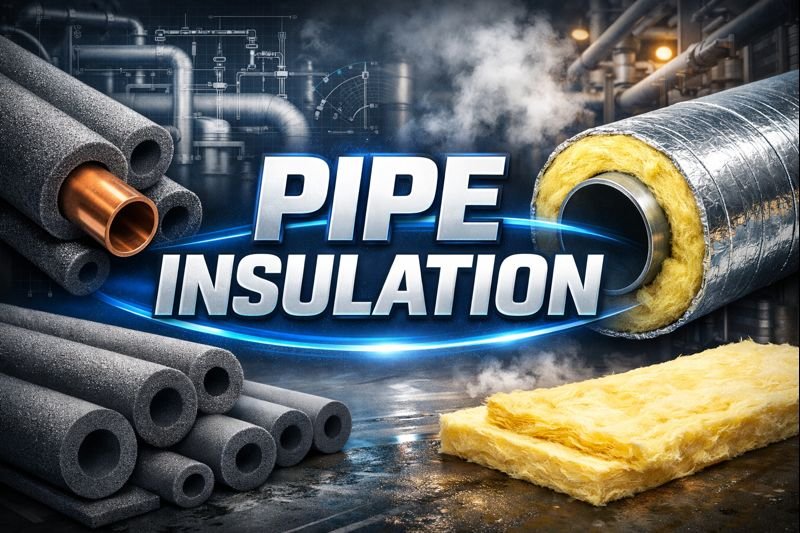
- Day 1 – Introduction to Pipe InsulationPipe insulation is the process of covering pipes with insulating materials to reduce heat loss or heat gain, protect personnel, prevent condensation, and improve energy efficiency. It is widely used in industries such as oil and gas, power plants, manufacturing, HVAC systems, and water supply networks. The main purpose of pipe insulation is to maintain the desired temperature of fluids flowing through pipes—whether hot or cold. By insulating pipes, energy consumption is reduced, operating costs are lowered, and system performance is improved. Pipe insulation also helps prevent freezing in cold environments and reduces the risk of corrosion caused by moisture buildup (corrosion under insulation). Common pipe insulation materials include fiberglass, mineral wool, polyurethane foam, elastomeric rubber, and calcium silicate. The choice of insulation depends on factors such as operating temperature, environmental conditions, safety requirements, and cost. In addition to thermal control, pipe insulation plays an important role in health, safety, and environmental (HSE) management. It protects workers from burns, reduces noise in some systems, and supports compliance with industrial standards and regulations. Overall, pipe insulation is a critical component of modern industrial and building services systems, contributing to energy efficiency, safety, and long-term equipment reliability.3
- Day 2 – Pipe Insulation MaterialHere are the common materials used for Pipe Insulation, clearly grouped and explained for training, site work, or documentation purposes: 1. Fiberglass (Glass Wool) Made from fine glass fibers Good thermal and acoustic insulation Commonly used in HVAC and industrial piping Temperature range: up to about 540°C Requires vapor barrier (aluminum foil or PVC jacket) 2. Mineral Wool (Rock Wool / Slag Wool) Made from natural rock or industrial slag Excellent fire resistance and sound insulation Suitable for high-temperature pipes Temperature range: up to 650°C 3. Calcium Silicate Rigid insulation material High compressive strength Used for high-temperature industrial piping (refineries, power plants) Temperature range: up to 650°C 4. Polyurethane Foam (PUF) Lightweight foam insulation Very low thermal conductivity Used for cold and chilled water pipes Common in refrigeration and cryogenic systems 5. Polystyrene (EPS / XPS) Expanded or extruded polystyrene Moisture resistant Used for cold water and chilled pipes Not suitable for high temperatures 6. Elastomeric Rubber (Nitrile Rubber / Armaflex) Flexible, closed-cell insulation Prevents condensation Ideal for HVAC and refrigeration pipes Easy to install and maintain 7. Foam Glass Made from recycled glass Completely moisture-proof and non-combustible Used in chemical plants and offshore installations High cost but very durable 8. Perlite Insulation Lightweight, inorganic material Used for high-temperature pipes Good fire resistance 9. Aerogel Insulation Advanced, ultra-light insulation Extremely low thermal conductivity Used where space is limited Expensive but highly efficient 10. Jacketing / Cladding Materials (Protective Coverings) Aluminum sheets Stainless steel sheets PVC jackets Used to protect insulation from weather, corrosion, and damage If you want, I can: Simplify this for students or trainees Turn it into a training handout or banner content Add temperature ranges, advantages, and applications in table form Customize it for industrial, oil & gas, or HVAC use2
- Day 3 – Insulation Tools and EquipmentBelow are the common Insulation Tools and Equipment used for pipe insulation work, suitable for training, site operations, and safety documentation: 1. Measuring and Marking Tools Measuring tape Steel rule Marker pens / chalk Square and compass (for marking pipe curves) 2. Cutting Tools Insulation knife Utility knife Hand saw / insulation saw Electric cutter (for large projects) Tin snips (for metal cladding) 3. Fastening and Fixing Tools Wire cutter Pliers Screwdrivers Spanners Rivet gun Hammer 4. Cladding and Jacketing Tools Sheet metal bender Hand seamer Rolling machine Pop rivet tool Drill machine 5. Adhesive and Sealing Tools Glue brush or roller Sealant gun Adhesive spreader Tape dispenser 6. Surface Preparation Tools Wire brush Scraper Sandpaper Cleaning cloths 7. Access and Support Equipment Ladders Scaffolding Mobile platforms Rope and harness (for height work) 8. Safety Tools and PPE (Very Important) Safety helmet Safety goggles / face shield Cut-resistant gloves Dust mask / respirator Safety boots Coverall Ear protection (where required) 9. Specialized Insulation Equipment Banding tools (for stainless steel or aluminum bands) Insulation pins and pin welder Heat gun (for shrinkable jackets) Thickness gauge 10. Lifting and Handling Equipment Chain block Slings Trolleys Wheelbarrow (site handling)1
- Step by Step Technique of Pipe Insulation JobBelow is a clear step-by-step technique for carrying out a Pipe Insulation job, suitable for training, site work, and HSE compliance: Step-by-Step Technique of Pipe Insulation Job Step 1: Job Planning and Safety Review job drawings and insulation specifications Identify pipe size, length, temperature, and insulation type Conduct Job Safety Analysis (JSA) Wear appropriate PPE (helmet, gloves, goggles, mask, safety boots) Step 2: Surface Preparation Ensure the pipe surface is clean, dry, and free from oil, rust, and dirt Remove old insulation (if any) Apply anti-corrosion paint or primer where required Allow coating to dry before insulation Step 3: Measurement and Material Selection Measure pipe diameter and length accurately Select correct insulation material and thickness Cut insulation to required size using insulation knife or saw Step 4: Installation of Insulation Open or split insulation material (pre-formed sections or sheets) Fit insulation tightly around the pipe without gaps Ensure joints are properly aligned Secure insulation using binding wire, adhesive, or insulation bands Step 5: Joint and Seam Sealing Seal all joints with approved adhesive or insulation tape For cold pipes, ensure vapor barrier is continuous to prevent condensation Check elbows, valves, flanges, and supports are fully insulated Step 6: Cladding / Jacketing Installation Measure and cut aluminum, stainless steel, or PVC cladding Fit cladding over insulation Fix using rivets, screws, or metal bands Seal overlaps and joints with silicone sealant or tape Step 7: Special Areas Insulation Insulate bends, tees, and reducers using pre-formed sections or hand-cut pieces Use removable insulation covers for valves and flanges if required Step 8: Final Inspection and Quality Check Check insulation thickness and tightness Ensure no exposed pipe or gaps Confirm cladding is secure and weatherproof Remove debris and clean work area Step 9: Handover and Documentation Complete inspection checklist Record materials used and work completed Hand over job to client or supervisor Step 10: Maintenance and Safety Monitoring Periodic inspection for damage or moisture ingress Repair any damaged insulation immediately1
- Day 5 – Health, Safety & ReportingHealth hazards associated with insulation work and safety precautions Record-keeping and reporting best practices Final assessment: quiz or interactive exercise1
Course Features
- Lecture 0
- Quizzes 8
- Duration 5 days
- Skill level Beginner
- Language English
- Students 6
- Assessments Yes